Engine Diagnostics in Pontiac: What Really Happens When We Scan Your Car
A straightforward, informal guide to how engine diagnostics work at Pontiac Auto Repair — what scan tools read, how we troubleshoot step by step, and how diagnostic fees are handled so you know what you’re paying for.
Why a diagnostic scan matters
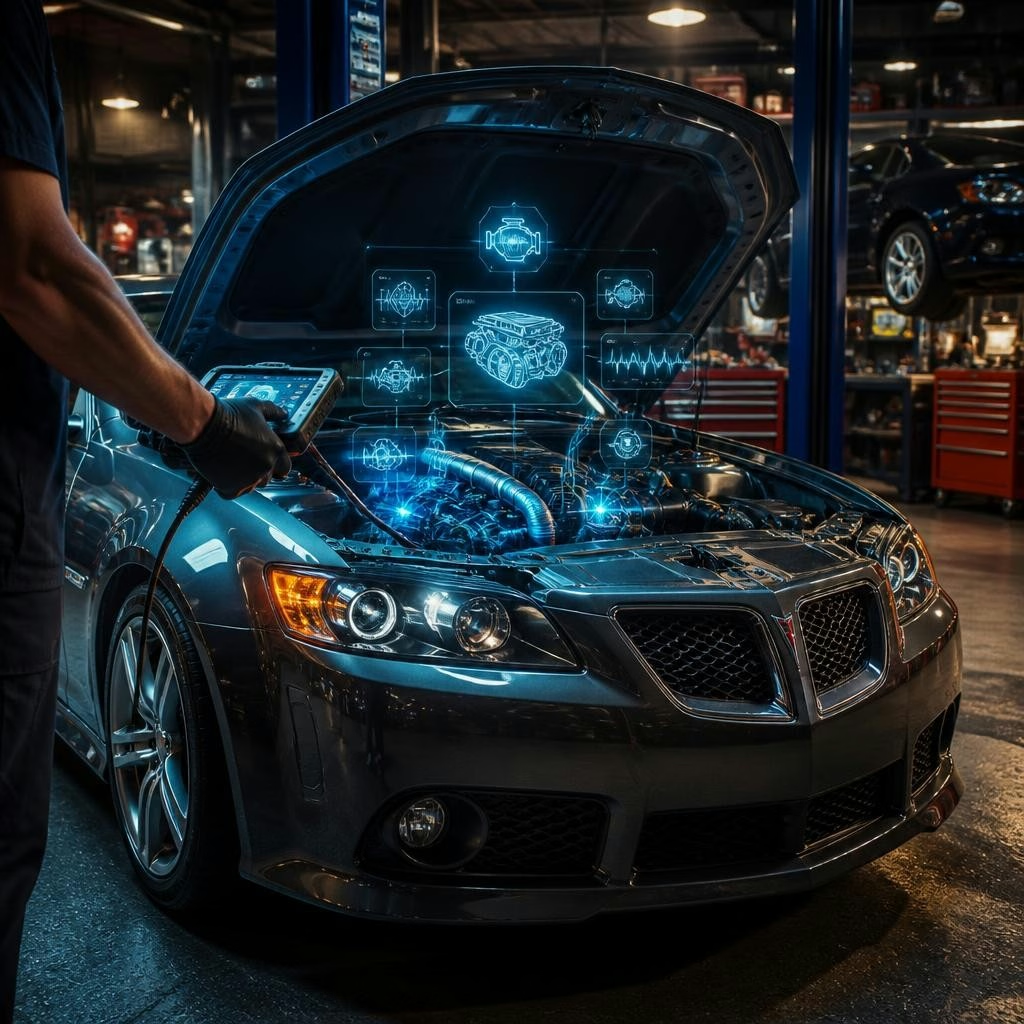
When your check engine light comes on or a car feels off, a diagnostic scan is the first tool a shop uses to avoid guessing. A scan pulls stored trouble codes and recent sensor data from your vehicle’s computer, giving a mechanic real clues about where to look. That information narrows down possibilities quickly — saving time and preventing unnecessary parts changes.
What a scan tool actually reads
Modern scan tools can read standard OBD-II trouble codes, freeze-frame snapshots (what the car’s computer saw when a fault happened), and live sensor data like engine RPM, fuel trim, oxygen sensor voltages, and coolant temperature. On its own a code is a starting point, not always a final diagnosis — it tells us what the computer noticed, not always the root cause.
How we turn codes into a diagnosis (step by step)
At Pontiac Auto Repair we follow a clear troubleshooting flow: intake and symptom review, connect a scan tool, interpret codes and live data, perform targeted visual and mechanical inspections, and then confirm with a test drive or component testing. Sometimes the next step is simple (a loose gas cap or a reset), other times it requires deeper checks of wiring, vacuum lines, sensors, or fuel and ignition systems.
What the diagnostic fee covers — and how it’s handled
A diagnostic fee covers the technician’s time to scan your vehicle, interpret codes, run tests, and provide a written estimate of recommended repairs. At honest shops like ours, that fee is treated as part of the repair process: if you approve the recommended work, the diagnostic charge is typically applied toward the repair. Customers have noted that the shop applies diagnostics to repairs when they choose to proceed, so you’re not paying twice for the same effort.
Common follow-up checks after a scan
After a scan we often perform a few routine checks depending on the code: visual inspections of wiring and connectors, battery and charging system checks, compression or leak-down tests for engine issues, and test drives to reproduce symptoms. We can also swap or bench-test suspect sensors and components when needed to confirm failures before replacing parts.
How long diagnostics can take (and why it sometimes takes longer)
A simple code and quick reset can be handled fast, but many diagnostics require careful testing and time on the road. Complex electrical faults, intermittent problems, or tests that require warm-up/cool-down cycles add hours. Some customers have noticed the shop can be busy and a bit slower than others — that often comes from doing the extra checks to make sure the repair really fixes the problem.
How to prepare and what to expect next
Before you come in, note when the issue started, any dashboard lights, driving conditions that trigger it, and any recent repairs or fluid changes — that info can speed things up. Ask for a written estimate and clarification that the diagnostic fee will be applied if you authorize repairs. If you’re in Pontiac or elsewhere in Oakland County, stop by 660 West Huron Street or call the shop for a quick conversation about symptoms and availability. Our approach is to explain the findings plainly and help you choose the right next step without pressure.
Customer review


Article by
Pontiac Auto Repair
Meet Jay, our honest owner and recovering automotive engineer who's all about building real relationships, not emptying your wallet. He knows word-of-mouth and thrilled repeat customers are the heart of success in today's online world—just check our bustling shop and glowing reviews. Whether it's routine maintenance or complex fixes, we're here for straightforward, reliable solutions. Swing by or give us a call today for an honest chat about your car troubles.